Fall 2024 prototype
Alien Survivor
A browser-playable Unity prototype with data-driven weapons, upgrades, enemy spawning, and runtime tuning hooks.
- Role
- Solo developer
- Status
- On hold
- Engine
- Unity
Overview
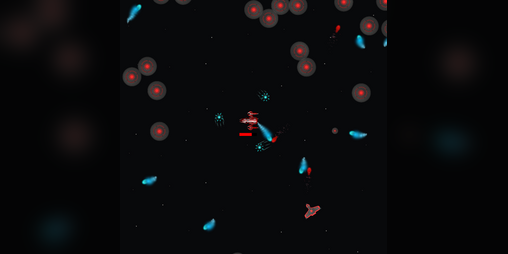
Alien Survivor is a solo Unity prototype for a top-down sci-fi action game inspired by survivor-style pressure, simple readability, and quick escalation. Built September to December 2024, the build is available on itch.io as a browser-playable prototype. The focus was a compact core loop with progression data-driven enough to extend without rewriting systems.
Implementation Details
As a solo project, this prototype demonstrates end-to-end implementation of modular systems, optimized spawner directors, and data-driven weapon scaling.
Enemy spawning director
- Built an enemy spawning director with spawn pacing, cap management, and optional object pooling to hold performance under high enemy counts.
- Implemented rarity-weighted enemy selection with per-type parameters such as speed, size, and squad count, plus runtime tuning hooks for spawn rate and movement speed.
Data-driven weapons and upgrades
- Built a fully data-driven weapon and upgrade framework with stat scaling and functional modifiers, such as homing and boundary ricochet, authored as editor-defined upgrade definitions.
- Created dynamic runtime UI that adapts to the available upgrades and current player state, scaling cleanly as new weapons and modifiers are added.
Delivery
- Set up the Unity project for rapid iteration and HTML5 delivery on itch.io.
What The Work Shows
Alien Survivor shows earlier end-to-end systems prototyping: building a compact core loop, making progression data-driven enough to extend, and getting the work into a playable browser build.